

Introduction: The Timeless Appeal of Moroccan Rugs
Moroccan rugs captivate collectors, interior designers, and travelers around the world. They combine ancestral craftsmanship, symbolic storytelling, and natural materials in a way that feels both timeless and contemporary. More than decorative elements, authentic Moroccan rugs express culture, identity, and regional heritage.
To fully appreciate their value, it is important to explore their origins, understand the traditional techniques behind their creation, discover the regional styles that define them, and learn where to find authentic pieces in Morocco—especially within artisan cooperatives and local workshops where craftspeople actively preserve the tradition.
The Origins of Moroccan Rugs
The story of Moroccan rugs begins in the villages and mountains inhabited by the Berber (Amazigh) tribes of North Africa. For centuries, families have woven rugs as part of daily life. Instead of producing them for trade, they created them for practical use inside their homes. As a result, rugs provided warmth during harsh winters in the Atlas Mountains and served as bedding, blankets, or protective floor coverings.
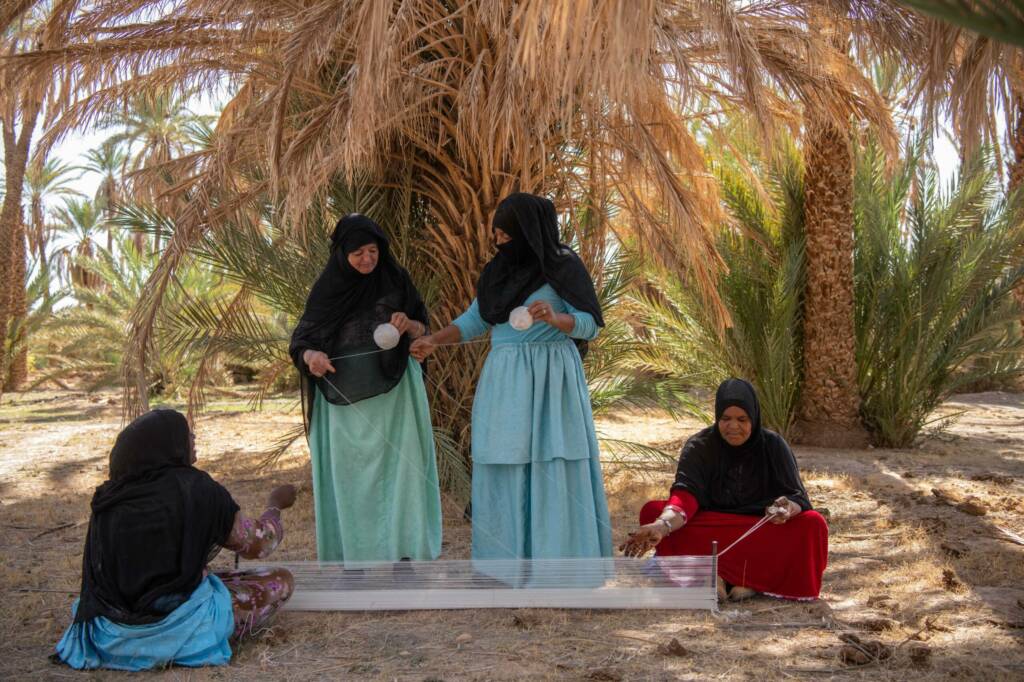
At the same time, weaving allowed women to express personal and collective identity. They incorporated symbols representing fertility, protection, family, spirituality, and nature. Rather than sketching patterns in advance, they wove intuitively. Consequently, each rug carried a unique narrative shaped by memory and experience.
Over time, trade routes expanded and cities such as Fez and Marrakech flourished. Merchants began to circulate Moroccan rugs beyond rural communities. Nevertheless, artisans continued to rely on handmade production, natural materials, and symbolic design. Therefore, even as markets evolved, the essence of the craft remained strong.
Traditional Craftsmanship: From Wool to Finished Rug
Natural Wool and Local Sourcing
Artisans craft authentic Moroccan rugs primarily from sheep wool sourced in the Middle Atlas and High Atlas regions. After shearing the sheep, they wash, card, and hand-spin the wool. Because they spin it manually, the fibers develop slight variations in thickness. These variations give the finished rug texture, depth, and personality.
Moreover, high-quality wool increases durability. A carefully woven Moroccan rug can last for decades. With time and use, it softens and develops a natural patina, which enhances its character instead of diminishing it.
Natural Dyeing Techniques
Traditionally, artisans extract dyes from plants, roots, minerals, and insects. For example, they obtain red tones from cochineal, yellow from saffron or wild plants, brown from walnut shells, and black from henna or mineral blends. Because these dyes come from natural sources, they create subtle tonal variations.
As a result, the colors feel layered and organic rather than flat or artificial. Although some contemporary workshops use synthetic dyes, many cooperatives deliberately preserve natural dyeing techniques in order to maintain authenticity and quality.
Hand-Knotting and Weaving
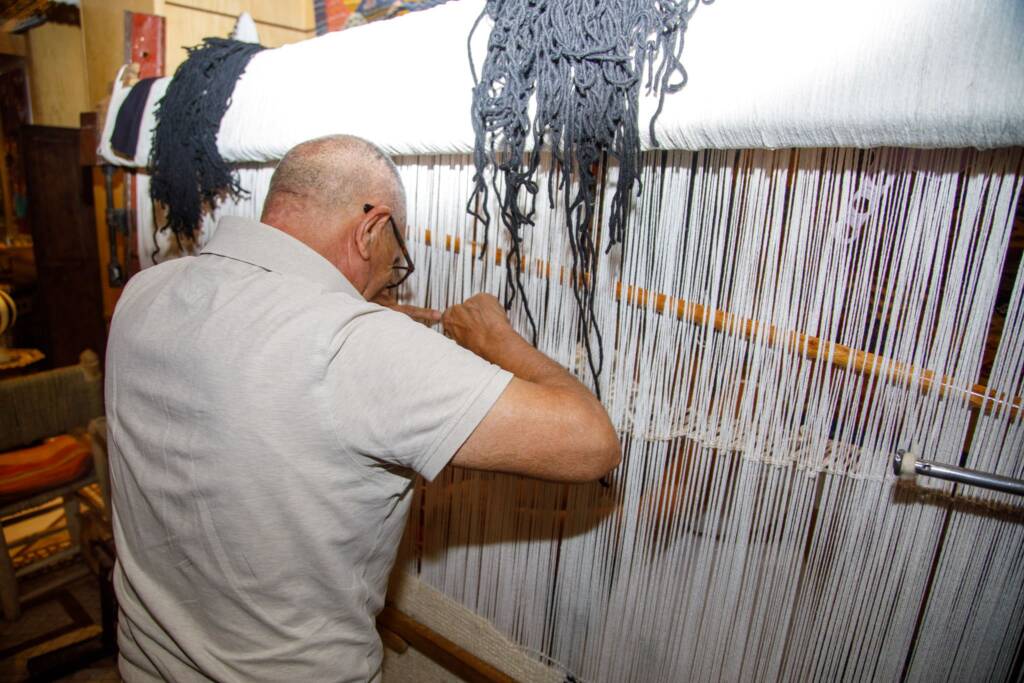
Weavers create most Moroccan rugs by hand-knotting wool on vertical looms. They tie each knot individually, row after row. Consequently, the process demands patience, precision, and experience. Depending on size and complexity, a single rug can require weeks or even months of work.
Because humans—not machines—control the weaving, small asymmetries naturally appear in the design. However, these irregularities signal authenticity rather than imperfection. In contrast, machine-made rugs look overly uniform and lack the subtle movement that characterizes handmade work.
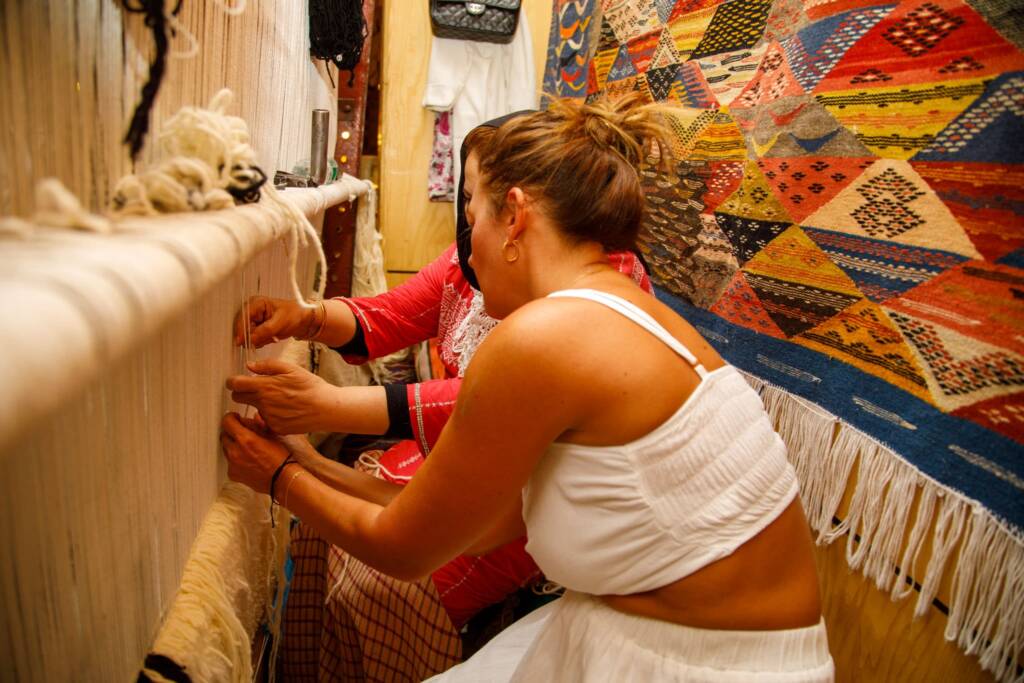
In addition to pile rugs, artisans also produce flat-woven kilims. Instead of tying knots, they interlace threads to create intricate geometric patterns. Therefore, kilims feel lighter and more flexible while still reflecting strong regional identity.
Regional Styles of Moroccan Rugs
Morocco’s varied geography has shaped a remarkable diversity of rug styles. Each region expresses its own aesthetic language through materials, colors, and motifs.
Beni Ourain Rugs
Weavers from the Middle Atlas Mountains create Beni Ourain rugs using thick, natural wool. Typically, they combine an ivory or cream background with simple black or brown geometric lines. Because of their plush texture and neutral palette, these rugs adapt easily to many interior styles.
For instance, they complement minimalist spaces, soften modern architecture, and add warmth to understated rooms. Their restrained design allows materials and textures to stand out without overwhelming the space.
Azilal Rugs
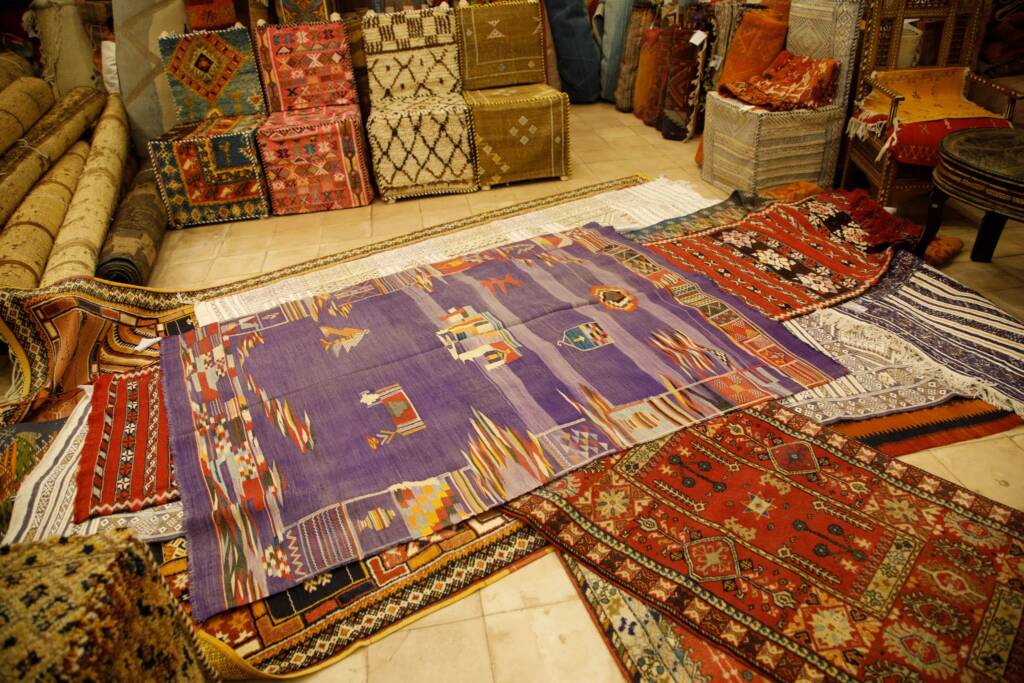
In contrast, artisans from the High Atlas region weave Azilal rugs with vibrant colors and expressive patterns. They often mix abstract shapes with symbolic motifs. As a result, each piece feels spontaneous and personal.
Furthermore, Azilal rugs introduce energy into a room. Designers frequently use them as focal points because their dynamic compositions naturally draw the eye.
Boucherouite Rugs
Rural communities developed Boucherouite rugs out of resourcefulness. Instead of wool, artisans weave them from recycled textiles such as cotton and fabric remnants. Consequently, these rugs display bold colors and eclectic patterns.
Although they emerged from necessity, Boucherouite rugs now attract attention for their creativity and sustainability. They bring texture, color, and personality into contemporary interiors.
Moroccan Kilims
Finally, Moroccan kilims offer a flat-woven alternative. Because artisans do not create pile knots, kilims remain thinner and lighter. Therefore, homeowners often layer them over larger rugs or place them in high-traffic areas. Their repeating geometric motifs create rhythm and balance within a space.
How to Recognize Quality in a Moroccan Rug
As demand grows worldwide, buyers must learn how to distinguish authentic handmade rugs from mass-produced imitations. Fortunately, several clear indicators reveal quality.
Examine the Material
First, touch the wool. Natural wool feels soft yet slightly irregular. It should not appear overly shiny or synthetic. Additionally, authentic wool often carries a subtle natural scent when new.
Turn the Rug Over
Next, examine the back. A handmade rug reveals visible knots and slight irregularities. Because artisans tie each knot individually, the reverse side reflects this manual process. By contrast, machine-made rugs appear mechanically perfect and overly consistent.
Assess Density and Weight
Then, evaluate density. A high-quality Moroccan rug feels substantial and dense for its size. Generally, tighter knotting indicates greater durability. Therefore, weight and structure often signal craftsmanship.
Observe Color Depth
Finally, observe the colors. Natural dyes create nuanced tones and gentle variations. Instead of flat brightness, you should notice depth and subtle shifts in shade. These details enhance authenticity and visual richness.
Where to Find Authentic Moroccan Rugs in Morocco
Although Moroccan rugs circulate globally, discovering them at the source provides deeper insight and connection.
Artisan Cooperatives in the Atlas Mountains
Across the Middle and High Atlas Mountains, women-led cooperatives actively preserve weaving traditions. These cooperatives organize production, ensure fair compensation, and maintain ancestral techniques. Because artisans work collectively, they strengthen both cultural continuity and local economies.
When visitors explore a cooperative, they witness the weaving process directly. They can ask questions, understand symbolism, and select pieces with full transparency. Consequently, the purchase becomes both meaningful and informed.
Marrakech Medina
Marrakech serves as a vibrant gateway to Moroccan rugs. Within the historic medina, especially in the carpet souks, merchants display a wide range of regional styles. By comparing textures, patterns, and origins, buyers can better understand differences in quality.
Moreover, curated showrooms and private workshops collaborate closely with rural cooperatives. They often provide background information about sourcing and assist with international shipping. Therefore, buyers benefit from both authenticity and logistical support.
Fez and Other Craft Centers
Fez, renowned for its artisanal heritage, offers another important destination. Many workshops in the city emphasize classical techniques and refined detailing. In addition, regions such as Ouarzazate and surrounding valleys continue to produce distinctive rugs rooted in local identity.
Moroccan Rugs in Contemporary Interiors
Despite their ancient origins, Moroccan rugs integrate effortlessly into contemporary design. Because they feature organic patterns and handmade irregularities, they soften clean architectural lines and minimalist spaces.
For example, a neutral Beni Ourain rug adds warmth without overwhelming a room. Meanwhile, a colorful Azilal or Boucherouite rug introduces contrast and artistic character. Likewise, layered kilims create visual depth and flexibility.
At the same time, growing appreciation for handcrafted and sustainable objects reinforces interest in Moroccan rugs. Since artisans rely on natural materials and time-intensive techniques, these pieces align with values that prioritize quality over mass production.
A Living Heritage
Moroccan rug weaving continues to evolve while honoring tradition. Each generation of artisans adapts motifs and color combinations to reflect contemporary tastes. Nevertheless, they maintain core techniques passed down through centuries.
Therefore, Moroccan rugs represent a living heritage rather than a static craft. They connect landscape, community, and skilled hands in a continuous dialogue between past and present.
Conclusion
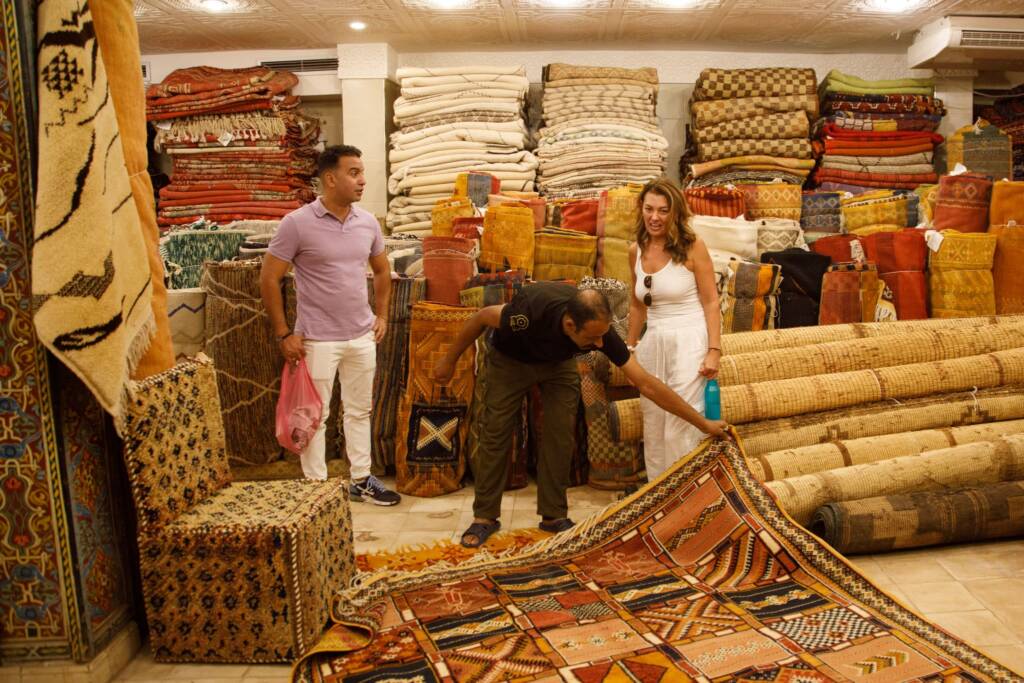
From the mountain villages of the Atlas to the vibrant souks of Marrakech, Moroccan rugs embody history, craftsmanship, and cultural identity. Artisans select natural materials, apply time-honored techniques, and weave symbolic expression into every piece.
Whether discovered in a rural cooperative or a traditional medina workshop, an authentic Moroccan rug offers more than decoration. It brings texture, story, and enduring know-how into a space. Ultimately, it reflects the human touch that defines true craftsmanship.
Frequently Asked Questions About Moroccan Rugs
What makes Moroccan rugs unique?
Moroccan rugs stand out because artisans weave them entirely by hand using traditional techniques passed down through generations. In addition, each region develops its own motifs, textures, and color palettes. As a result, every rug reflects a specific cultural identity rather than a standardized industrial design.
Are Moroccan rugs always handmade?
Authentic Moroccan rugs are handmade. Artisans knot or weave each piece on traditional looms, which requires time, skill, and experience. However, mass-produced imitations exist on the market. Therefore, buyers should always check the back of the rug, examine the materials, and ask about its origin.
How long does it take to make a Moroccan rug?
The production time depends on size, density, and complexity. Generally, a small rug may take several weeks, while a large, densely knotted piece can require several months. Because artisans tie each knot individually, the process naturally demands patience and precision.
What materials do Moroccan rugs use?
Most traditional Moroccan rugs use natural sheep wool sourced from the Atlas Mountains. In some cases, artisans also incorporate cotton for the foundation. Meanwhile, Boucherouite rugs use recycled textiles instead of wool. Natural dyes derived from plants and minerals often create the colors, especially in high-quality pieces.
How can you tell if a Moroccan rug is high quality?
First, examine the wool: it should feel soft yet slightly irregular. Next, turn the rug over to inspect the knots. Handmade rugs display visible variations, whereas machine-made rugs look uniform. Finally, observe the density and color depth. High-quality rugs feel substantial and show subtle tonal variations rather than flat colors.
Where can you buy authentic Moroccan rugs in Morocco?
You can find authentic Moroccan rugs in artisan cooperatives across the Middle and High Atlas Mountains. Additionally, the medinas of Marrakech and Fez offer access to reputable dealers and curated workshops. Whenever possible, visiting a cooperative allows you to see the weaving process and understand the rug’s origin directly. Luxury travel agencies can also assist in arranging these visits, providing personalized tours and access to exclusive workshops for an enhanced experience
Do Moroccan rugs work in modern interiors?
Yes, Moroccan rugs integrate seamlessly into contemporary spaces. For example, neutral Beni Ourain rugs soften minimalist interiors, while colorful Azilal or Boucherouite pieces create strong focal points. Because their designs balance tradition and abstraction, they adapt easily to both classic and modern settings.
